
How Arrest Warrants Work in Williamson County
Arrest warrants in Williamson County start with a complaint or sworn affidavit laying out facts for probable-cause review. A magistrate or other authorized judicial officer reviews that filing and may issue a warrant or a criminal summons. General Sessions lists criminal and search warrants among its work. The resulting warrant authorizes an arrest for a stated offense. It is not the same as a summons to appear. It also differs from a bench warrant, which follows a missed court obligation. Anyone holding paperwork should check its court and process label before choosing a contact.
Probable Cause at Williamson County Magistrates Office
The Magistrates Office sits inside the Criminal Justice Center and is staffed around the clock. Judicial commissioners review probable-cause matters, issue warrants or summonses when the legal test is met, conduct initial appearances, set bonds, and set first court dates. They are judicial officers, not police investigators. A civilian seeking a criminal summons or certain arrest-warrant review in Williamson County may bring a police report or relevant materials. Filing that request starts the review. It does not guarantee a warrant will issue. The Magistrates Office is separate from the clerk that maintains an existing case file.
Inside a Williamson County Arrest Warrant
A court or agency file may record the issuing court and judicial officer, process type, docket or warrant number, complaint date, offense, probable-cause finding, bond terms, service agency, and return or next-court information. Williamson County has not published a complete WCSO public result row or warrant-number format. The fields here describe possible routing details only. They do not promise that each one is public or appears on a screen.
| Warrant number | No countywide format published. Format not documented |
|---|---|
| Case or docket | Identifies the file; it may differ from a police incident number. |
| Charge | Offense or statutory class may appear in the court record. |
| Issuing court | Names the clerk or judge that controls the process. |
| Bond and date | Case-specific; confirm the current amount and appearance with the court or jail. |
| Service or return | Shows an execution or officer return when recorded; ask WCSO or the serving agency. |
Williamson County Arrest Warrants Follow Rule 4
Tennessee Rule of Criminal Procedure 4 describes the warrant-or-summons choice after a complaint and probable-cause review. The county clerk records the matter in the correct court system. General Sessions Criminal/Traffic covers county criminal files and tickets issued by WCSO or state troopers; Circuit Criminal covers indictment and felony trial records. Read the Tennessee criminal rules alongside the local court's directions. A summons still requires a court appearance. Failing to respond may bring separate court action. The state rules page identifies the process rules that govern issuance in Williamson County and every other county.
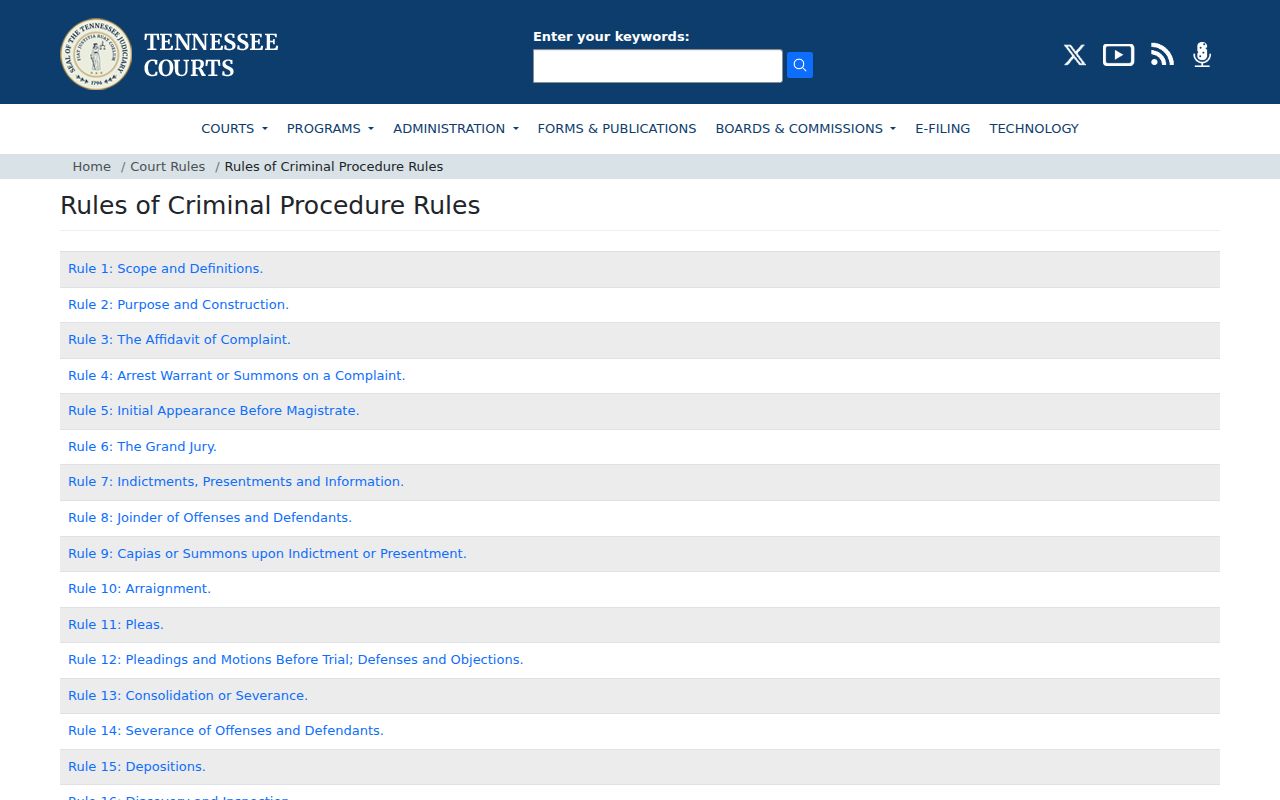
That rule index is statewide background. The issuing Williamson County court controls a case's next date.
Serving Arrest Warrants in Williamson County
WCSO's Criminal Warrants Unit apprehends people with outstanding arrest warrants across Williamson County and coordinates extradition. City police can serve city-originated process, and other agencies may execute warrants too. Monthly WCSO reports count service by its Warrants Division and by other agencies separately. After an arrest, intake includes booking and a magistrate or initial appearance. WCSO says that can take several hours. Bond is not available until intake is complete. The jail information line handles bond basics after booking; it is not a pre-arrest search.
Williamson County Arrest Warrant Bond Follows Intake
Bond at the Williamson County jail waits until booking finishes, which WCSO says can take several hours. After intake, jail information at 615-790-5570 can give basic charge and bond details. Bring cash that matches the court-set amount exactly; the jail gives no change. For a surety bond, the person or family picks the bondsman. Deputies do not recommend one. Ask which court date and release conditions apply, since bond addresses custody, not dismissal or recall of the case.
Williamson County Warrant Counts Include Other Agencies
The 2023 WCSO annual report counted 2,909 criminal warrants received, 2,493 served by WCSO, and 1,253 served by the Warrants Division. That division also made 997 arrests. The categories show receipt, service, and arrest are distinct measures in Williamson County. The same report includes civil-warrant work and court dockets, but those totals are system context, not a lookup for one person's status. See the WCSO annual report for the aggregate figures. A clerk confirms the court record; the sheriff confirms its service role.
Comparing Arrest, Summons, and Bench Warrants
These orders serve different purposes. A summons directs an appearance without taking a person into custody at once. A bench warrant responds to court noncompliance. An arrest warrant in Williamson County authorizes custody after probable-cause review. See the separate bench warrant process if the issue began with a missed setting.
| Feature | Arrest Warrant | Summons | Bench Warrant |
|---|---|---|---|
| What it orders | Arrest on a stated offense | Appear in court | Arrest tied to a court obligation |
| Basis | Probable cause | Complaint and court process | Missed setting or noncompliance |
| Who issues | Magistrate or authorized judge | Authorized court officer | The court that set the obligation |
| How to respond | Ask court/counsel about surrender or bond | Attend the listed date | Ask clerk about recall, reset, or hearing |
Federal Fugitive Warrants Use a Separate Route
A federal or out-of-state warrant may be served in Williamson County without ever becoming an ordinary county court warrant. The Middle Tennessee Joint Fugitive Task Force includes WCSO among its partners, and the originating court or agency still controls the case. WCSO combines criminal warrants and extradition questions on one line. For a federal matter, use the U.S. Marshals or federal court route rather than a municipal payment portal. The U.S. Marshals Middle District page lists the local task force and contact information. That federal courthouse location is separate from the Williamson County Judicial Center.
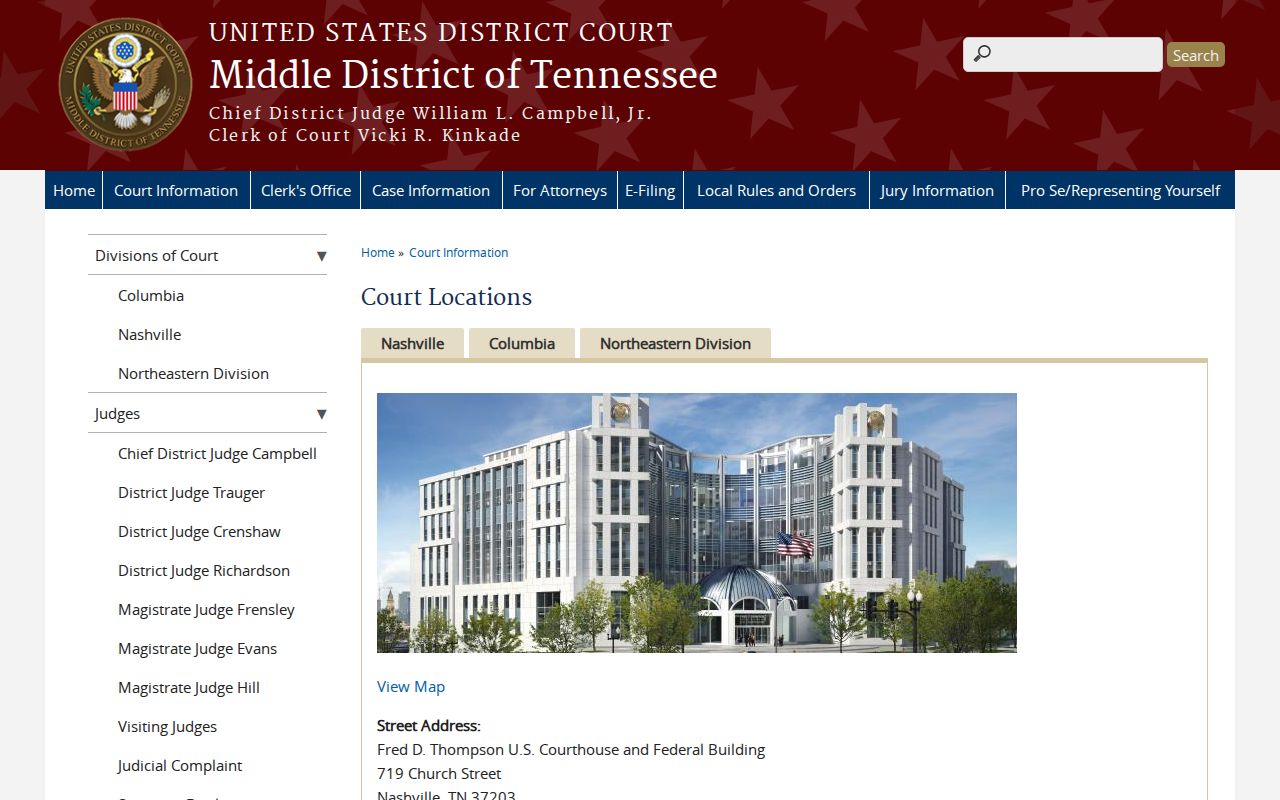
A federal notice should be checked with the federal clerk, counsel, or U.S. Marshals.
If There's an Arrest Warrant for You
Start with your own court paperwork. It names the Williamson County court that issued the warrant, and that clerk is your first call. WCSO Criminal Warrants / Extraditions is the second. Ask if the court will take a motion, a scheduled appearance, a surrender arranged through counsel, or some other step. The public pages make no promise that walking in spares you booking. If you are already booked, wait until intake finishes, then ask the jail about bond: cash bond means the exact amount the court set, and release does not end the case. Keep every court date and written order.
Important: Speak with a Tennessee lawyer before arranging surrender, posting bond, or asking a court to recall an arrest warrant.