
Checking for a Warrant in Williamson County
Start with the paperwork you already have. The court or citation named there tells you which office to call. Williamson County posts no countywide name-search form, so a warrant check runs phone by phone. The Sheriff's Criminal Warrants / Extraditions line, the Circuit Court Clerk, and each municipal court each answer a different slice of the question. Call the clerk first for case status. Then ask the sheriff whether its service unit has received the process. Before you call, gather your full legal name, date of birth, case or citation number, issuing agency, and the approximate date. A search result is only a lead, never a court ruling. If a possible active arrest warrant turns up, talk with a Tennessee lawyer before you decide how to appear.
- Read the notice for the court, case number, and date. Start with that clerk, since a city citation may never enter the county clerk's file.
- For sheriff-held criminal process, call WCSO Criminal Warrants / Extraditions at 615-790-5565 and ask which issuing court controls the next step.
- Use General Sessions Criminal for WCSO or THP matters, Circuit Criminal for indictment or felony files, and the named city clerk for municipal cases.
- If the question concerns a person already booked, call jail information at 615-790-5570 after intake. Booking can take several hours.
- For a likely warrant, ask the issuing clerk about a reset, motion, appearance, or bond, and get legal advice before surrendering.
Williamson County Warrant Channels Stay Separate
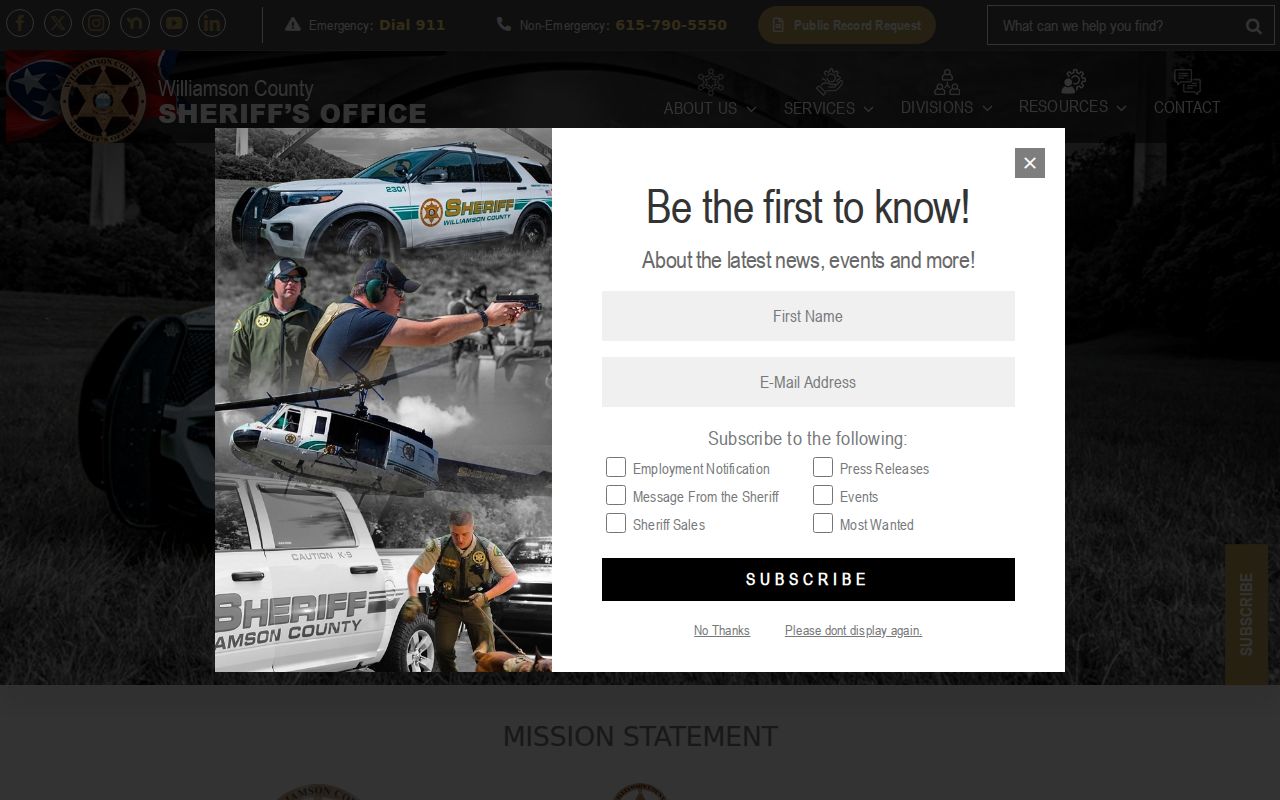
Each office in Williamson County keeps its own docket, and none of them sees the whole picture. The Sheriff's website posts selected wanted-person bulletins, but there is no searchable list of all active warrants. A city payment tool may find one ticket and still miss a later failure-to-appear process. General Sessions and Circuit Criminal records sit with the county clerk, while city courts keep their own citations and court actions. Match your question to the right channel. The WCSO Criminal Warrants Unit handles sheriff-held service questions, and the Circuit Court Clerk routes General Sessions and Circuit files. The Sheriff's Office homepage points to warrant services and office contacts too. A blank screen at one office is not a countywide answer, so use official links to ask about a specific process.
A Williamson County agency speaks only for the records it holds. Any other issuing court or city clerk must confirm its own docket.
Williamson County Warrant Types
Williamson County courts issue different process for different situations, and the word on a notice matters. An arrest, a missed court setting, an indictment, and a search each travel their own route. A municipal traffic citation, a criminal arrest warrant, and a Rule 9 capias do not share one lookup or one path to resolution. General Sessions serves as the first criminal court for most county matters, and it also handles traffic court, bonds, and search warrants. Circuit Criminal keeps indictment and felony trial records. City judges, meanwhile, handle local ordinance and traffic cases.
| Warrant Type | How It Arises | Who Issues It |
|---|---|---|
| Arrest warrant | Probable-cause process for a stated offense | Magistrate or authorized judge |
| Bench warrant | Often follows a missed setting or court noncompliance | Court that set the appearance |
| Search warrant | Allows a specified search for evidence | General Sessions or another authorized judicial officer |
| Capias | Rule 9 process upon indictment or presentment | Circuit Criminal court process |
Williamson County Courts, Jail, and Warrant Roles
Two buildings anchor the Williamson County justice system, and they do different jobs. The Judicial Center at 135 Fourth Avenue South is where the public reaches the Circuit Court Clerk and the courtrooms. The Criminal Justice Center at 408 Century Court houses the jail, WCSO headquarters, and a 24/7 Magistrates Office. You may need both. The clerk can identify the court file or the next setting. Magistrates review probable-cause requests and hold initial appearances. The sheriff serves or coordinates process, and jail staff answer post-booking questions. The county's court-system page lays out these roles.
Inside a Williamson County Warrant Record
A Williamson County file may list the issuing court, the process type, a case or citation number, the complaint or reason, the issue date, the charge, bond terms, a service return, and later court action. Those are possible fields, not a guarantee that every screen shows them all. The county has published no public warrant-number pattern or WCSO result-row layout. Read status words carefully. "Served," "booked," "recalled," and "license compliant" mark different events, not one shared condition. The issuing court confirms a recall or reset, WCSO can address service, and the jail can answer after booking.
| Case or process number | No countywide public number format is documented. Format not published |
|---|---|
| Name and identifiers | Used by the holder to route the request; person-level values are not reproduced here. |
| Charge or reason | May describe the complaint, missed setting, or court order. |
| Issuing court | Shows which clerk or judge controls the case. |
| Bond or release | Case-specific when set; no countywide criminal schedule was located. |
| Service and status | Confirm service, recall, return, or satisfaction with the responsible office. |
Williamson County Warrant Status Needs Confirmation
A Williamson County file tracks events, not one blanket state. Don't collapse statuses into a simple "clear" or "active" label. Ask which office entered the status, and when it last changed.
- Issued
- A judicial officer authorized the process.
- Served
- An officer carried it out or returned service information.
- Recalled or quashed
- The issuing court withdrew or set aside the warrant.
- Compliant
- A court or state record shows a separate payment or license step was met.
Williamson County publishes no glossary of electronic warrant codes. For a code's meaning in a case, the court clerk is the source.
Issuing and Serving Warrants in Williamson County
In Williamson County, magistrates and judges decide whether court process may issue at all. General Sessions handles criminal and search warrants, traffic court, and bond settings. Circuit Criminal is the route for indictment and felony trial records. Municipal courts keep city citation and ordinance cases. WCSO and city police serve the process, but they never replace the court that issued it. For sheriff-held criminal warrants, use the Criminal Warrants / Extraditions line. The unit's public page describes its apprehension work and separates it from civil service.
Williamson County Sheriff's Office Criminal Warrants
408 Century Court
Franklin, TN 37064
615-790-5565
Williamson County Warrant Counts Are Aggregate
Numbers describe workload, not named records. WCSO's May 2025 monthly report counted 5,625 active criminal warrants. It also logged 223 warrants received, served by the Warrants Division and other agencies together. None of it is a searchable list.
The May activity report gives useful Williamson County context. For an individual status, the issuing clerk or sheriff's unit still answers.
Williamson County Warrant Service Has Several Agencies
A Williamson County criminal case belongs to whichever agency started it. The docket schedule splits the work. Tuesday belongs to Franklin Police, while Wednesday covers WCSO, Brentwood, Spring Hill, Nolensville Police, and the Tennessee Highway Patrol. So a county address alone tells you little. Bring the citation or court notice to the clerk and ask which docket or division holds the file. The published schedule also lists bond, jail, traffic, and driver-license dockets. Confirm a live hearing date with the court itself. One wrinkle is worth knowing. A city arrest may be booked at the Williamson County jail while the city court keeps the case.
If You Have a Williamson County Warrant
Start by finding out who issued the warrant. Every Williamson County warrant traces back to one office. A city clerk holds a municipal citation, while the General Sessions and Circuit clerks each control their own files. WCSO can tell you whether its criminal unit has received a warrant for service. Ask the issuing court directly whether a reset, a motion, an appearance, or counsel is needed. The sheriff's unit serves papers; it is not the payee for every court matter. Thinking about surrender? Call the issuing clerk and WCSO first, and consider speaking with a lawyer before you walk in. No public page promises that a walk-in avoids booking. Bond turns on the case, and release does not end the charge. Only the issuing court can recall or clear a Williamson County warrant.
Important: A court-approved reset, surrender plan, or bond depends on the process and the judge. Confirm the route with the issuing court before going to the jail.
Williamson County Warrant Bond Starts After Intake
WCSO accepts cash bond at the Williamson County jail around the clock, but only once booking is complete. Bring the exact amount. No change is given. Intake can take several hours, so call the jail information line at 615-790-5570 to check status after booking. A surety bond is a separate option when the court allows it. WCSO does not recommend a bondsman. Ask the court for the bond terms and the next court date. A bond can secure release, but only the issuing court can recall the warrant.
Williamson County Warrant Records and Public Access
The Tennessee Public Records Act covers existing, nonexempt government records. Tennessee citizens may inspect eligible records. Copies can require a form, identification, and copy or labor costs. The county does not have to create an all-warrants report. The Williamson County sheriff and the county each name separate public-record request coordinators. Sealed process, juvenile files, and active investigations may be withheld or redacted. For a specific file, ask the office that holds it. Give a court, a date range, and a case or citation number to narrow the request.
Key Rules:
Tenn. Code Ann. § 10-7-503 gives Tennessee citizens access to public records that exist, subject to exemptions.
Tenn. Code Ann. § 10-7-503(a)(2)(B) sets a seven-business-day response action when prompt production is not practical.
Tenn. Code Ann. § 37-1-154 limits public access to juvenile law-enforcement records.
Williamson County Warrant Requests Under TPRA
A records request works best when it is narrow. Name the court, the date, and the case or citation number, then ask the office that holds the file for the record showing process or status. At the Sheriff's Office, route it to Public Record Request Coordinator Tina Weatherby. Williamson County requests aimed at departments outside the Sheriff's Office go through Bradley Boshers instead. If nothing comes back quickly, county policy gives the office seven business days to produce the record, deny it in writing with a reason, or state how much time it needs. A request is not a warrant search database, and confidential details stay protected. The WCSO records request instructions spell out the steps.
Williamson County Public Record Response Time
The Tennessee Public Records Act calls for prompt access when eligible records are readily available. Seven business days is the outer track. When immediate production is not practical, the custodian must provide the record, deny the request with a written explanation, or state how much extra time is reasonably needed. That window is not a promise of release. Exemptions, redactions, and record-location questions can change the result. Ask your Williamson County custodian for its current policy and any copy or labor charges. The Tennessee Office of Open Records Counsel explains the statute in plain terms.
Williamson County Warrants by City
Each city in Williamson County runs its own police department and municipal court for local citations and court process. Franklin handles traffic, parking, and city ordinances. Spring Hill's court takes city-code and Class C traffic matters. Brentwood, Nolensville, and Fairview keep separate city channels too. None of their citation tools adds up to a countywide warrant search. Start with the city named on your notice. Use the county sheriff only if the matter has entered its service or booking system. Population figures for each city come from the 2020 Census.
Franklin Warrant Search
83,454 residents in 2020 · municipal court and police share 900 Columbia Avenue.
Spring Hill Warrant Search
50,005 residents in 2020 · city court citation portal and clerk route.
Brentwood Warrant Search
45,373 residents in 2020 · municipal court inside police headquarters.
Nolensville Warrant Search
13,829 residents in 2020 · court clerk handles citation and FTA questions.
Fairview Warrant Search
9,357 residents in 2020 · City Court has no public online warrant search.